6
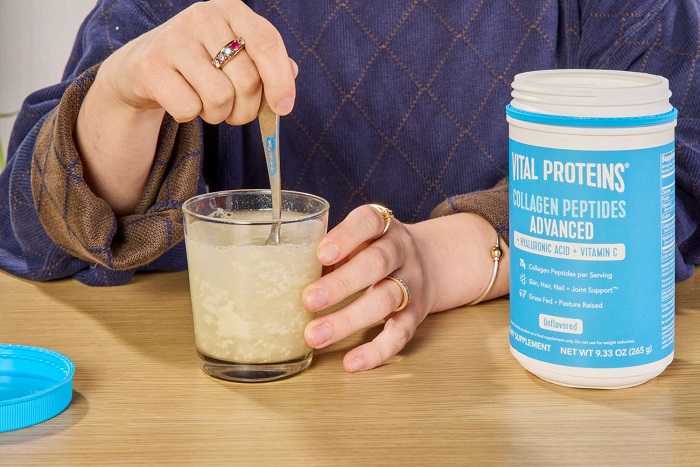
Collagen is often described in casual wellness discussions as a cosmetic fountain of youth—a powder to stir into morning coffee for glossy hair and glowing cheeks. While that commercial branding has propelled the supplement into mainstream kitchen pantries, it grossly understates the biological significance of the compound itself. Collagen is not a superficial vanity protein. It is the literal architectural glue of the human body, representing roughly thirty percent of our total systemic protein mass. It forms the invisible infrastructure that gives skin its tensile resistance, cushions articulating bone surfaces against grinding friction, and provides the fibrous framework upon which skeletal minerals crystallize.
Starting in our mid-twenties, human biology undergoes an imperceptible yet relentless structural shift. Natural endogenous collagen synthesis begins to taper by roughly one percent per year. Compounded by ultraviolet sun exposure, chronic psychological stress, systemic inflammation, and metabolic waste from refined dietary sugars, this slow deficit steadily degrades connective tissues. The consequences eventually register in the mirror as fine lines and loss of elasticity, in the knees as morning stiffness, and deeper within the skeleton as gradual bone mineral depletion. Restoring this biological scaffolding requires looking beyond topical creams and understanding how targeted collagen supplementation influences cellular regeneration from within.
The Bioavailability Paradox: Peptides as Cellular Messengers
A long-standing criticism of collagen supplementation argued that consuming collagen was pointless because stomach acids simply break down whole proteins into generic amino acids, making a scoop of collagen powder no different than an egg white or a chicken breast. This critique overlooked the fundamental mechanics of enzymatic hydrolysis.
Whole, native collagen is an immense triple-helix molecule with a high molecular weight that the human digestive tract cannot absorb intact. Modern supplemental collagen, however, undergoes controlled enzymatic hydrolysis, breaking those unwieldy protein braids into short, low-molecular-weight chains called hydrolyzed collagen peptides. These specialized dipeptides and tripeptides—predominantly pairs of proline, hydroxyproline, and glycine—resist total breakdown in the gastrointestinal tract.
They cross the intestinal barrier intact and enter the bloodstream, functioning as biological signal flares. When specialized receptor cells—such as dermal fibroblasts, articular chondrocytes, and skeletal osteoblasts—encounter these circulating peptide fragments, they misinterpret them as signs of widespread tissue breakdown. This false alarm triggers a robust counter-response: the cells dramatically ramp up the production of new, native collagen fibers, hyaluronic acid, and structural proteoglycans. Supplementation does not simply provide raw bricks; it rings the alarm bell that commands the biological construction crew to get to work.
Dermal Architecture: Restoring Elasticity and Moisture Retention
The outermost layer of your skin, the epidermis, is merely a protective shield; the true structural integrity and youthful appearance of the face reside in the dermis below. The dermis is an extracellular matrix comprised of dense collagen fibers interwoven with flexible elastin and moisture-binding glycosaminoglycans. As native collagen fragments degrade with age, this matrix collapses, leading to sagging, loss of rebound elasticity, and epidermal thinning.
Consistent intake of hydrolyzed collagen peptides systematically restructures this dermal layer from the inside out. As circulating peptides stimulate deep fibroblast activity, the density of collagen fibrils increases, tightening the underlying network that supports the surface skin.
Equally vital is collagen’s synergistic impact on deep hydration. The peptide fragments stimulate the localized synthesis of hyaluronic acid, a molecule capable of holding up to one thousand times its weight in water. By reinforcing the moisture-trapping matrix within the dermis, collagen supplementation combats transepidermal water loss. The result is skin that retains its internal plumpness, softens existing micro-wrinkles, and maintains a resilient, hydrated barrier against dry outdoor air and environmental pollutants.
Articular Preservation: Cushioning Cartilage and Reducing Joint Wear
Joint discomfort is frequently accepted as an inevitable consequence of aging or an active athletic lifestyle. Every step, run, and heavy lift subjects synovial joints—such as the knees, hips, and spine—to significant compressive loads. Articular cartilage, the smooth, glassy connective tissue that caps the ends of articulating bones, relies heavily on Type II collagen to withstand these shearing forces.
Unlike muscle tissue, articular cartilage possesses virtually no direct blood supply. It relies on the diffusion of nutrients from surrounding synovial fluid, making natural repair exceptionally slow. Over decades of repetitive motion or high-impact training, cartilage fibers fray faster than chondrocytes can replenish them, leading to bone-on-bone friction, inflammation, and degenerative joint pain.
Targeted collagen supplementation changes this dynamic. Specific collagen peptides have a direct biological affinity for joint tissue, accumulating in articular cartilage within hours of ingestion. Once concentrated in the joint capsule, they stimulate chondrocytes to synthesize fresh Type II collagen and aggrecan, the primary shock-absorbing protein in cartilage. Over sustained periods, this steady cellular nourishment helps preserve joint space, improves synovial fluid viscosity, and reduces chronic inflammation, allowing individuals to maintain fluid athletic mobility and comfortable, pain-free daily movement.
Beyond Calcium: Restoring the Flexible Matrix of Bone
Conventional conversations surrounding bone density and osteoporosis prevention focus almost exclusively on calcium and vitamin D. While these minerals are undeniably critical, treating bone health solely as a calcium issue misunderstands basic bone biomechanics.
Bone is a composite material remarkably similar to reinforced concrete. Calcium hydroxyapatite crystals act as the rigid concrete, providing compressive strength and hardness. However, concrete without structural rebar is dangerously brittle; a sharp impact will shatter it. Type I collagen constitutes ninety percent of the organic bone matrix, serving as the internal steel rebar that gives the skeleton its tensile flexibility and shock-absorbing capacity. Without an adequate collagen foundation, bones become brittle, fragile, and prone to micro-fractures regardless of how much calcium is deposited.
Supplementing with collagen peptides directly supports bone remodeling by altering the balance between bone breakdown and bone formation. Peptides stimulate osteoblasts (the cells responsible for building new bone matrix) while downregulating excessive osteoclast activity (the cells that resorb old bone). Over months of daily use, this dual action preserves the structural trabecular architecture inside bones, supporting greater overall bone mineral density and significantly lowering the risk of debilitating fractures later in life.
Optimizing Supplementation: Form, Cofactors, and Consistency
Capturing the systemic benefits of collagen requires an intentional approach rather than haphazard use. A few essential guidelines ensure optimal biological utilization:
-
Select the Right Collagen Profile: Look for hydrolyzed bovine or marine collagen peptides. Bovine sources provide an abundant blend of Type I and Type III collagen, ideal for skin firmness and bone density, while marine collagen offers superior bioavailability due to its exceptionally small peptide size. For targeted joint cartilage concerns, specialized undenatured Type II collagen formulas provide targeted therapeutic support.
-
Pair with Essential Cofactors: The enzymatic machinery responsible for synthesizing new collagen fibers requires specific nutritional partners. Vitamin C is an absolute biological necessity; without it, the enzymes prolyl hydroxylase and lysyl hydroxylase cannot stabilize the triple-helix structure of newly minted collagen. Consuming your collagen alongside vitamin C, zinc, and copper ensures that your cells possess every raw element needed to assemble functional protein strands.
-
Commit to Long-Term Consistency: Connective tissues remodel on deliberate biological clocks. While improvements in skin hydration and fine lines often emerge within four to eight weeks, joint cartilage recovery typically requires twelve to twenty-four weeks, and significant bone remodeling demands six to twelve months of daily adherence.
Collagen supplementation represents a proactive, biologically sound approach to long-term vitality. Rather than attempting to mask the surface symptoms of aging with topical fixes, supplying the body with easily absorbed, bioavailable peptides restores the foundational structural matrix that keeps skin supple, joints resilient, and bones strong for decades to come.
